


Self growth is the continuous process of improving your skills, mindset, habits, and self-awareness so you can live a more fulfilling, capable life. It’s not a destination you “arrive” at; it’s a daily practice. Self-growth means becoming slightly better than you were yesterday, in ways that actually matter to you.
Mind and Mindset: The Foundation of Everything.
Your mind is the operating system behind every decision you make. If your thinking is stuck in fear, comparison, or self-doubt, no productivity shortcut will fix that.
Key mindset shifts that drive growth:
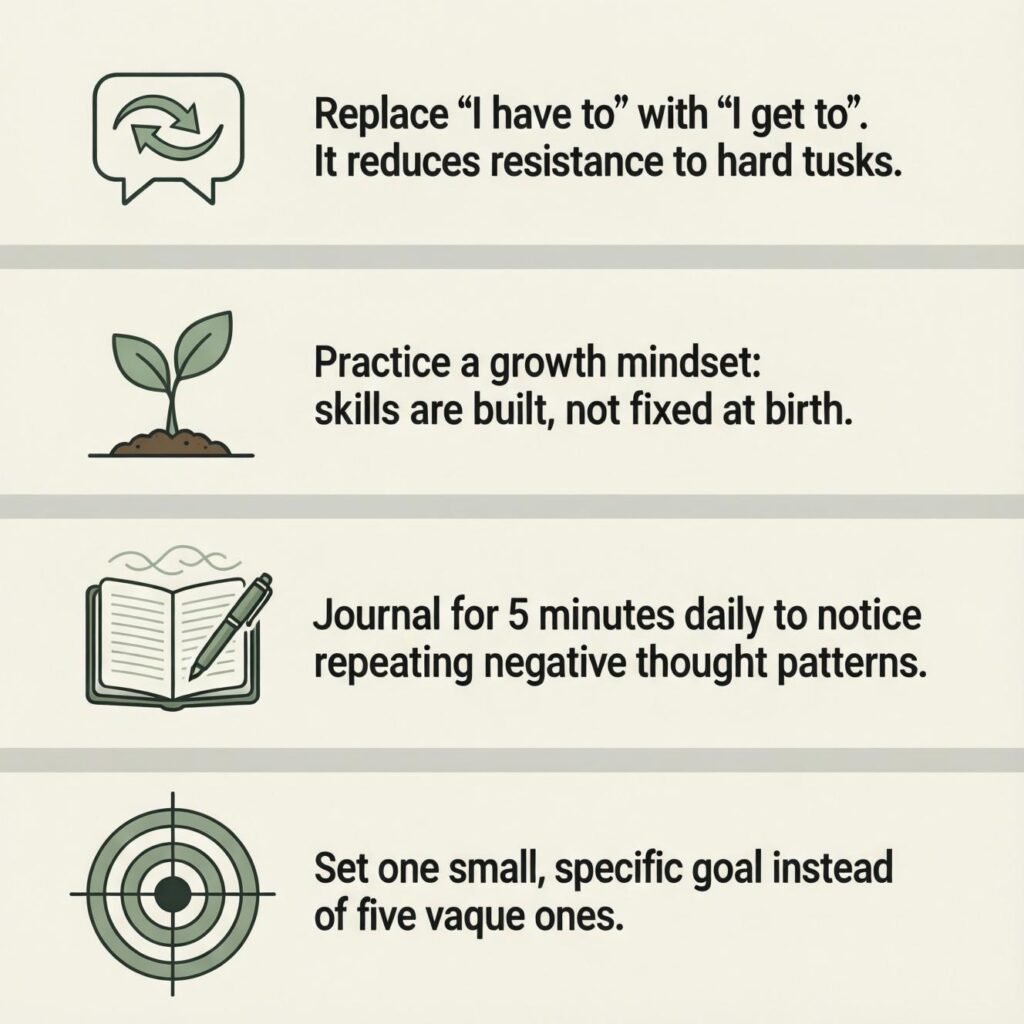
- Replace “I have to” with “I get to”. It reduces resistance to hard tasks.
- Practice a growth mindset: skills are built, not fixed at birth.
- Journal for 5 minutes daily to notice repeating negative thought patterns.
- Set one small, specific goal instead of five vague ones.
Why does self-talk matter more than you think?
The way you speak to yourself shapes how you see your life. Research in cognitive behavioral psychology shows that reframing negative self-talk can reduce anxiety and improve performance under pressure.
Nutrition: Eat Better, Grow Better
You can’t build a better life on a foundation of poor energy. Nutrition directly impacts focus, mood, and motivation; these are the three things on which self-growth depends most.
Simple nutrition habits that support growth:
- Drink water in the morning before caffeine
- Add at least one vegetable or fruit to every meal
- Reduce sugar intake gradually, not all at once
- Eat protein at breakfast to stabilize energy.
According to the World Health Organization, a balanced diet is one of the strongest factors for long-term physical and mental well-being.
Exercise: Move Your Body, Grow Your Mind
Exercise isn’t just about how you look; it’s one of the most powerful tools for mental clarity, discipline, and confidence.
Why movement expedites self growth:
- Just 20–30 minutes of walking daily improves mood and reduces stress
- Regular exercise improves sleep quality, which improves decision-making
- You don’t need a gym; workouts at home work just as well
Mental Health: The Factor Most People Ignore
You can eat healthy food and exercise daily and still feel stuck inside. Because mental health matters just as much. If you ignore it, it doesn’t go away; it comes back later as burnout, anxiety, or numbness.
Ways to protect your mental health:
- Normalize rest to enhance productivity, not be lazy
- Set boundaries with people and work that leave you feeling drained
- Talk to a therapist or counselor if stress feels constant. Asking for help is a strength, not a weakness
- Limit doom-scrolling; it quietly increases anxiety
The World Health Organization notes that mental health conditions are among the leading causes of disability worldwide, which makes proactive care mandatory, not optional.
Environment and Relationships: The Neglected Growth Factor

Most people underestimate this one. You start to act like the five people you spend the most time with. If your environment normalizes procrastination, negativity, or excuses, it becomes harder for you to grow too.
Small environment changes that help:
- Follow accounts online that inspire, rather than those that make you feel like comparing yourself to others.
- Spend more time with people who motivate you to grow
- Keep your physical space clean. Disorder affects attention far more than people realize.
Finance: Why Financial Stress Blocks Growth
It’s really hard to focus on becoming your best self when you’re constantly worried about rent or debt. Financial stability isn’t about being rich; it’s about having enough breathing room to think clearly.
Practical finance habits for growth:
- Track your spending for a month before making a budget
- Build a small emergency fund, even if it’s just a few dollars a month
- Avoid comparing your finances to others online
- Learn one new financial skill per month
Sleep: The Hidden Growth Habit
Sleep isn’t a waste of time, it’s when your brain strengthens learning, repairs the body, and regulates emotions.
Compromising on sleep quietly cancels out progress made in mindset, exercise, and mental health. Aim for 7–8 hours consistently, and try to keep a similar sleep and wake time, even on weekends.
Conclusion
Self growth isn’t a single decision; it’s built from small, repeated choices across your mindset, body, emotions, finances, and environment.
You don’t need a perfect morning routine or a complete life overhaul. You need one small habit, done consistently, in one area that matters to you right now.
FAQs:
What is self growth in simple words?
Self growth is the process of improving yourself over time, your skills, habits, mindset, and emotional well-being.
What are the main factors that affect self growth?
The biggest factors are mindset, nutrition, exercise, mental health, finances, sleep, and environment.
How long does self growth take?
There’s no fixed timeline. Small mindset and habit changes can show results within a few weeks, but deeper personal growth is an ongoing, lifelong process.
Can self growth happen without money?
Yes. Journaling, walking, reading library books, and improving self-talk cost nothing. Financial stability helps reduce stress, but it isn’t a requirement to start growing.
How does nutrition affect personal growth?
Poor nutrition leads to low energy, mood swings, and poor focus, making it harder to build good habits. Balanced meals support steady energy and clearer thinking throughout the day.